Our responsibility
active and responsible
For us, sustainability means acting with foresight and taking responsibility for future generations. In research and development, we work collaboratively on projects aimed at conserving resources and ensuring sustainable production. We are constantly striving to use resources efficiently and to reduce the environmental impact of our production. To this end, we focus on specific measures in the areas of energy, packaging, raw materials and production processes.
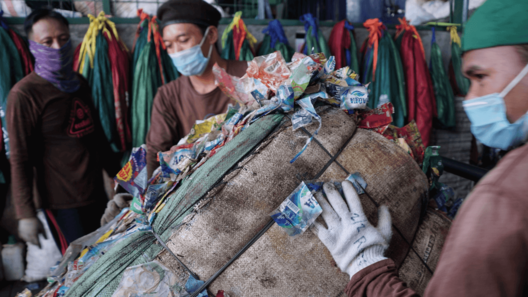
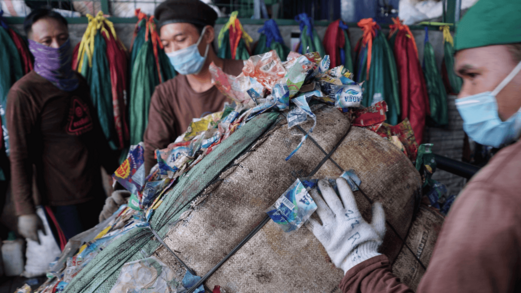
At CLEANHUB: Men deliver collected plastic.
![[Translate to Englisch:] Plastiktüte schwimmt im Ozean_cleanhub](/fileadmin/_processed_/a/3/csm_AlmaWin_cleanhub_pastic_1400x787_e49ca40cbe.jpg)
CLEANHUB: Plastic in our oceans pollutes our coastlines and breaks down into dangerous microplastics.
![[Translate to Englisch:] Sortieranlage für Plastikmüll bei PreZero](/fileadmin/_processed_/7/f/csm_almawin_besuch_bei_prezero_sortieranlage_202409_746661ea88.jpeg)
At PREZERO: highly specialised sorting plants separate recyclable plastic from plastic waste.
That's what we do
Protecting WATER, the basis of our lives
Our products are free from microplastics, phosphates, synthetic fragrances, colourants and preservatives that pollute water bodies and the natural environment. Our in-house wastewater treatment plant pre-treats process water from production before it enters the municipal sewage system.
PACKAGING
We use recycled or recyclable materials for our packaging. These include: FSC Mix-certified cardboard packaging containing at least 70 per cent recycled paper, alternative packaging made from grass-based cardboard (30 per cent grass, 70 per cent recycled paper) or refill pouches, which use 75 per cent less material than a bottle of the same volume. Bottle bodies are made from mono-PE and mono-PET to ensure better recyclability when disposed of correctly. With Klar EcoSensitive, out of consideration for people with allergies and those sensitive to chemicals, we ensure that no fragrance-contaminated recycled plastic is used in our plastic packaging. For our labels, we use PE monomaterial and mineral oil-free printing inks. Some products are available in refillable canisters.
MATERIAL-SAVING CONCENTRATES
Many of our products are concentrates. The water content of our liquid products is reduced to the bare minimum. Powdered products contain no non-functional fillers. This reduces the packaging volume and, consequently, material consumption.
Energy management
We source our electricity from renewable energy sources. Our in-house photovoltaic system and internal combined heat and power plant also contribute to our energy supply. Our building is heated and cooled by a heat pump. Innovative technology for recovering heat from production is used to heat operational areas or to heat process water in production and administrative processes. LED lighting throughout the premises and a green roof contribute to efficient energy use.
ENVIRONMENTAL MANAGEMENT
As a DIN ISO 14001 and EMAS III-certified company, we are audited annually on the implementation of our environmental objectives. The GREEN-BRANDS certification, awarded every two years, confirms our ongoing optimisation of measures to enhance climate protection. The relevant certificates are available for download.
PRODUCT CERTIFICATIONS
Our products are certified in accordance with the ECOCERT® standards (Standard for Eco Detergents and Cleaning Products (Standard V6 – August 2022) and Ecogarantie®. These certifications demonstrate our responsible and verifiable use of resources.
ENVIRONMENT AND CIRCULAR ECONOMY
Through our involvement with CleanHub, we support global projects aimed at collecting plastic waste to prevent even more plastic from entering the environment and the oceans.
Our partnership with PREZERO promotes the circular economy for packaging raw materials. Plastic waste is recycled as a valuable raw material. PREZERO not only collects plastic waste but also organises the production and distribution of recycled plastic.
Our Certifications
for your safety
You can rely on our certified quality: as part of regular audits, relevant business and product processes are assessed by independent certification bodies in accordance with the relevant certification standards. Among other things, these assessments take into account requirements relating to raw materials, manufacturing, packaging, product formulations, energy consumption and biodegradability.
You can see which specific requirements apply to our products and which products are certified accordingly by checking the relevant certification labels on our products.
Below, we provide a transparent overview of the individual certifications and their respective requirements.

ECOGARANTIE and ECOCERT
annual audits according to strict criteria
Since 2003, we have had our products tested by these two independent certification bodies.
They guarantee:
- Natural, plant-based (where available, from certified organic cultivation) and mineral raw materials
- No synthetic fragrances, colourants or preservatives
- No microplastics
- No nanotechnology
- No genetic engineering
- No animal testing on finished products
Good biodegradability of surfactants in accordance with legal requirements.
Further information can be found at:
ECOCERT®: Detergents and cleaning products certified by Ecocert Greenlife SAS, in accordance with the “Eco Detergents and Cleaning Products” standard (Standard V6 – August 2022), available at detergents.ecocert.com/en
Ecogarantie®: www.ecogarantie.eu, ECOGARANTIE Standard Part III for detergents and cleaning products, as of October 2024
![[Translate to Englisch:] Green Brand Siegel 2025-2026 für Klar EcoSensitive](/fileadmin/_processed_/a/4/csm_Klar_GB-G-A_25_26_58d397dfa4.jpg)
GREEN BRANDS
bi-annual audits to improve sustainability
Awarded GREEN BRAND status since 2013. This seal is only awarded to ecologically sustainable brands that are committed to climate protection, sustainability and ecological responsibility in a convincing and consistent manner.
learn more: green-brands.org
The additional seals for the Klar EcoSensitive brand are marked with an identification number. The respective annual evaluations of the certification of the brands can be viewed by entering the test number pn the page www.gb-id.org* This ensures greater transparency and increased credibility.
*The number must be entered without spaces: 2025020103.
![[Translate to Englisch:] DIN ISO 14001 Siegel](/fileadmin/_processed_/4/f/csm_ISO_14001_AW_2a617b7076.png)
EMAS III, DIN ISO 14001, DIN ISO 9001
quality management
EMAS III is the most demanding system for sustainable environmental management worldwide. As an EMAS-certified company, we continuously improve our environmental performance with the help of a standardised management system. https://www.emas.de/en
DIN ISO 14001 specifies requirements for the AlmaWin environmental management system. This means we are committed to complying with and optimising environmental guidelines and targets. Read more about DIN ISO 14001
Our process-oriented quality management system is certified according to DIN ISO 9001. This enables us to further develop processes at all levels. Read more about DIN ISO 9001
CleanHub
clean coasts and seas
Through our commitment, we support Clean Hub projects. Plastic waste is collected worldwide and sent for recycling. This promotes environmental awareness, encourages responsibility and creates jobs.
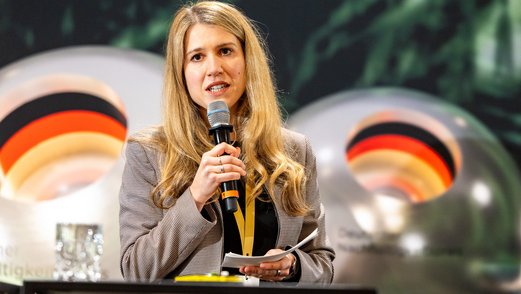
German Sustainability Award 2026
Recognition for our diverse commitment!
We are proud to have received the German Sustainability Award. This recognises our consistent commitment, over more than 30 years, to our resource-efficient and innovative environmental and product philosophy.
![[Translate to Englisch:] Sortieranlage bei PreZero](/fileadmin/_processed_/7/f/csm_almawin_besuch_bei_prezero_sortieranlage_202409_f44434e9c1.jpeg)
PreZero
Circular economy that makes sense.
Through our cooperation with PreZero, we are promoting a genuine circular economy. Plastic waste is a valuable resource. In PreZero, we have a competent partner for high-quality recyclates at our side.
Why we do not use the following ingredients
Synthetic fragrances, dyes and preservatives are copied from nature and produced chemically. They are cheaper to produce than natural variants but are usually difficult to degrade and can accumulate in the environment, in animals and in humans. It is also not easy for consumers to see whether the declared fragrances are of natural or synthetic origin, or whether they are a mixture of both.
More and more consumer products contain nanomaterials. In cleaning products, for example, they may be found in products that seal surfaces to make them less prone to soiling. Due to their tiny size, they can be absorbed through the skin or inhaled, and accumulate in the body’s organs. Although initially classified as harmless, studies are increasingly showing harmful effects on the brain, blood vessels and DNA.
For decades, phosphates were a central component of detergents and cleaning agents. Their salts serve as water softeners and prevent dirt dissolved in the washing water from settling back onto clothing. If they get into our waters, they act as fertilizers and accelerate algae growth. As a result, they deplete the water of oxygen and release toxic gases, leading to fish dying.
Optical brighteners are used by many conventional manufacturers to give white clothes a particularly bright-looking touch. In the washing process, optical brighteners cling onto the fibres and cause ultraviolet light, which is invisible to the human eye, to be transformed into visible blue light. This additional blue light, together with the complementary colour yellow, makes the clothes look ‘whiter’.
Optical brighteners are absorbed by the fibers during washing and then remain on the laundry. They have no cleaning effect whatsoever and are not readily biodegradable. Optical brighteners can be removed from wastewater, but for the most part they remain in the sewage sludge. There is ongoing debate regarding the potential hormonal effects of certain classes of substances. In the case of optically brightened textiles, absorption of the brighteners into the body is unlikely despite direct skin contact, due to their high molecular weight. Since this effect cannot be entirely excluded, we choose not to use them.
Enzymes in detergents help to wash laundry thoroughly from as low as 20°C by breaking down molecules of protein, fat and carbohydrate soiling. Most enzymes in detergents are obtained from genetically modified microorganisms. By genetically modifying the microorganisms, the enzymes can be made more efficient. However, the long-term consequences of genetically manipulated enzymes entering the environment via wastewater are uncertain.
We deliberately do not use enzymes from genetically engineered microorganisms. So they are produced neither with nor through genetic engineering.
Microplastics released into the environment can potentially impact animal and human organisms through their chemical ingredients (e.g. bisphenol A and plasticisers). It is believed that the increasing amount of microplastics in humans has adverse health effects.
While valid studies on the effects of microplastics on humans are still pending, they are believed to cause diseases ranging from cancer to obesity.